Best CRM with social media integration is no longer a luxury but a necessity in today’s digitally driven business world. Imagine seamlessly connecting your customer interactions across various social media platforms directly within your CRM system, enabling you to nurture leads, personalize communication, and cultivate lasting relationships.
This powerful integration allows you to gain valuable insights into customer sentiment, track social media campaigns, and respond to inquiries promptly. By unifying your social media presence with your CRM, you can unlock a wealth of data and streamline your marketing efforts, ultimately leading to increased brand awareness, stronger customer engagement, and ultimately, higher conversions.
CRM Systems and Social Media Integration
In today’s highly competitive business landscape, Customer Relationship Management (CRM) systems have become indispensable tools for businesses of all sizes. CRM systems enable organizations to effectively manage customer interactions, streamline sales processes, and foster lasting relationships. The core principle of CRM revolves around centralizing customer data and insights, providing a comprehensive view of each customer’s journey and preferences.
The integration of social media into CRM has emerged as a game-changer, transforming how businesses engage with their customers. Social media platforms have become a primary source of customer feedback, brand sentiment, and valuable insights into customer behavior. By integrating social media data into their CRM systems, businesses can gain a deeper understanding of their target audience, identify potential leads, and personalize their marketing efforts.
Benefits of a CRM with Social Media Integration
The integration of social media into CRM offers a wide range of benefits, empowering businesses to enhance customer engagement, optimize marketing campaigns, and improve overall business performance.
- Enhanced Customer Engagement: Social media integration allows businesses to interact with customers on their preferred platforms, fostering real-time conversations and building stronger relationships.
- Targeted Marketing: By leveraging social media data, businesses can segment their audience based on demographics, interests, and behaviors, enabling them to deliver personalized marketing messages that resonate with specific customer groups.
- Improved Lead Generation: Social media platforms are a rich source of potential leads. By integrating social media data into their CRM systems, businesses can identify and nurture leads, converting them into loyal customers.
- Enhanced Customer Service: Social media integration enables businesses to provide prompt and efficient customer service, addressing queries and resolving issues in a timely manner.
- Real-Time Insights: By monitoring social media conversations, businesses can gain valuable insights into customer sentiment, brand perception, and emerging trends, allowing them to adapt their strategies accordingly.
Key Features of CRM with Social Media Integration
A CRM with strong social media integration empowers businesses to effectively manage their social media presence and leverage its potential for customer engagement and growth. This integration allows for seamless interaction across multiple social media platforms, streamlining processes and enhancing the overall customer experience.
Social Media Monitoring and Listening
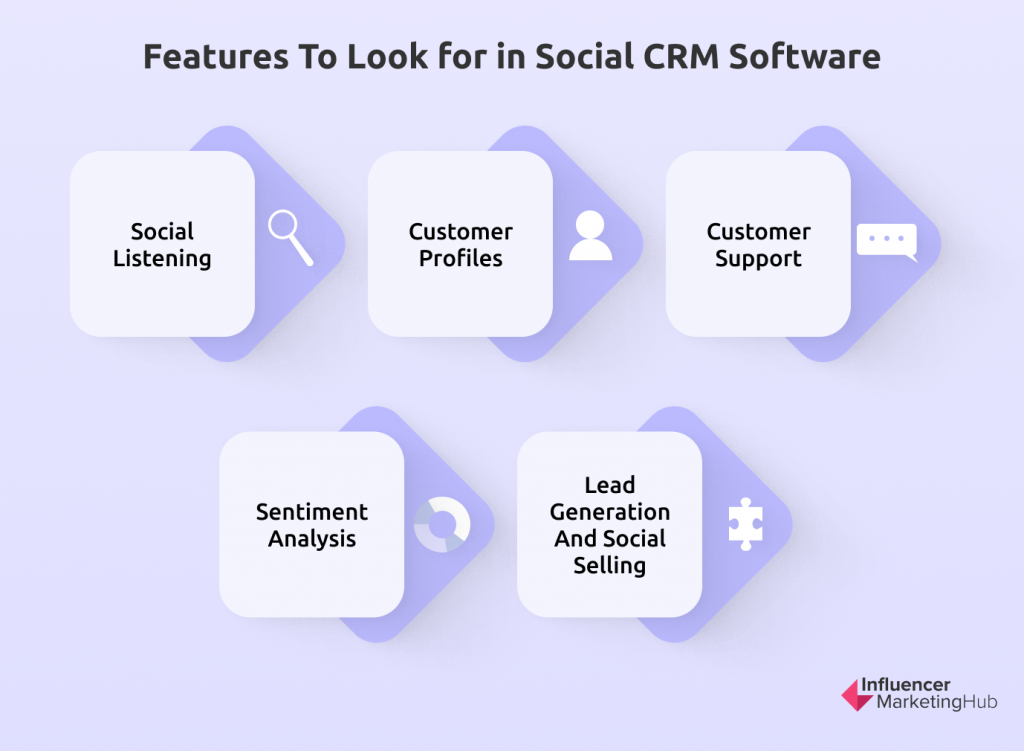
Social media monitoring and listening are essential features that allow businesses to track conversations and mentions related to their brand, products, and competitors across various social media platforms. This capability provides valuable insights into customer sentiment, emerging trends, and potential threats.
- Real-time tracking: Businesses can monitor social media channels in real-time to identify and respond to customer inquiries, complaints, or praise. This allows for swift resolution of issues and immediate engagement with customers.
- Sentiment analysis: By analyzing the tone and language used in social media conversations, businesses can gauge customer sentiment towards their brand, products, or services. This information can be used to improve marketing strategies, product development, and customer service.
- Competitive analysis: Social media monitoring tools enable businesses to track competitors’ activities, including their marketing campaigns, product launches, and customer engagement strategies. This allows for benchmarking and identifying opportunities for improvement.
Social Media Marketing and Advertising
Integrating social media marketing and advertising within a CRM system allows businesses to target specific customer segments based on their social media behavior and preferences. This enables more effective and personalized campaigns, leading to higher engagement and conversion rates.
- Targeted advertising: By leveraging social media data, businesses can create highly targeted advertising campaigns that reach specific demographics, interests, and behaviors. This ensures that advertising dollars are spent effectively, reaching the right audience.
- Social media automation: CRM systems with social media integration can automate tasks such as scheduling posts, managing social media campaigns, and analyzing performance metrics. This frees up marketing teams to focus on strategic initiatives and creative content development.
- Social media analytics: Tracking key performance indicators (KPIs) such as engagement, reach, and conversions allows businesses to measure the effectiveness of their social media campaigns and make data-driven adjustments to improve performance.
Social Media Customer Service
Integrating social media with customer service allows businesses to provide timely and personalized support to customers directly through their preferred social media channels. This enhances the customer experience and strengthens brand loyalty.
- Social media inbox: A centralized social media inbox allows customer service agents to manage inquiries and complaints from multiple social media platforms in one location. This streamlines communication and ensures a consistent response across channels.
- Social media ticketing system: Integrating social media interactions with a ticketing system allows for proper tracking and resolution of customer issues. This ensures that all inquiries are addressed efficiently and customer satisfaction is maintained.
- Social media automation for customer service: Automated responses for frequently asked questions (FAQs) can be set up to provide instant support to customers. This frees up customer service agents to handle more complex issues and ensures a quicker response time.
Factors to Consider When Choosing a CRM with Social Media Integration: Best Crm With Social Media Integration
Selecting the right CRM with social media integration is crucial for businesses looking to enhance customer engagement, streamline operations, and improve marketing efforts. It’s essential to consider various factors to ensure the chosen solution aligns with your business needs and objectives.
Budget
Budget plays a significant role in choosing a CRM with social media integration. It’s essential to determine your budget constraints and explore CRM solutions that fit within your financial limits. Factors to consider include:
- Pricing Models: CRMs offer various pricing models, including subscription-based, per-user, or tiered pricing. Evaluate each model to determine the most cost-effective option for your business.
- Hidden Costs: Be mindful of potential hidden costs associated with features, integrations, support, and training. Research the pricing structure thoroughly to avoid unexpected expenses.
- Return on Investment (ROI): Consider the potential ROI of investing in a CRM with social media integration. Evaluate the benefits, such as improved customer engagement, increased sales, and enhanced marketing effectiveness, to justify the investment.
Industry-Specific Needs
Different industries have unique requirements for CRM solutions. It’s important to choose a CRM that caters to the specific needs of your industry. Factors to consider include:
- Industry-Specific Features: Some CRMs offer industry-specific features tailored to specific sectors, such as healthcare, finance, or retail. Evaluate these features to ensure they meet your industry’s unique requirements.
- Compliance Regulations: Depending on your industry, you may need to comply with specific regulations. Choose a CRM that adheres to relevant industry standards and regulations to avoid legal issues.
- Best Practices: Research industry best practices and benchmark your CRM needs against successful companies in your sector. This will help you identify essential features and functionalities for optimal performance.
Scalability
Scalability is crucial for businesses that anticipate growth. Ensure the chosen CRM can accommodate your future needs without compromising performance. Factors to consider include:
- User Capacity: Evaluate the CRM’s user capacity and ensure it can handle your current and future user base. Consider your anticipated growth and choose a solution that can scale accordingly.
- Data Storage: Determine the CRM’s data storage capacity and ensure it can accommodate your growing data volume. Choose a solution with flexible storage options to prevent data limitations.
- Performance: Evaluate the CRM’s performance under increasing workload and ensure it can handle the demands of your growing business. Choose a solution with robust infrastructure and optimized performance.
Integration Capabilities
Seamless integration with existing systems is essential for a smooth CRM implementation. Ensure the chosen CRM can integrate with your current software stack. Factors to consider include:
- API Availability: Verify the CRM’s API availability and ensure it offers robust APIs for integration with other systems, such as marketing automation, email marketing, and accounting software.
- Pre-built Integrations: Explore the CRM’s pre-built integrations with popular third-party applications. This can simplify the integration process and save time and effort.
- Integration Support: Assess the CRM provider’s integration support and ensure they offer resources and assistance for seamless integration with your existing systems.
Checklist of Essential Features
Here’s a checklist of essential features to evaluate when comparing different CRM solutions:
- Social Media Monitoring: The CRM should enable you to monitor social media channels for brand mentions, customer feedback, and industry trends. This helps you understand customer sentiment and respond promptly to inquiries.
- Social Media Publishing: The CRM should allow you to schedule and publish content across various social media platforms. This streamlines your content marketing efforts and ensures consistent engagement.
- Social Media Analytics: The CRM should provide comprehensive social media analytics to track performance, measure engagement, and identify areas for improvement. This helps you optimize your social media strategy and maximize ROI.
- Social Media Listening: The CRM should enable you to listen to conversations happening on social media, identify potential leads, and engage with prospects. This helps you build relationships and generate qualified leads.
- Social Media Advertising Integration: The CRM should integrate with social media advertising platforms, allowing you to target specific audiences and track campaign performance. This helps you optimize your advertising spend and reach the right customers.
- Social Media Customer Service: The CRM should facilitate social media customer service, allowing you to respond to inquiries, resolve issues, and build relationships directly on social media platforms.
Popular CRM Platforms with Strong Social Media Integration
Choosing the right CRM platform is essential for businesses looking to leverage social media effectively. Many CRM systems offer robust social media integration features, allowing businesses to manage their social media presence, engage with customers, and analyze social media data within a unified platform.
Popular CRM Platforms with Strong Social Media Integration
| Platform | Pricing | Key Features | Target Audience | Industry Focus |
|---|---|---|---|---|
| HubSpot | Starts at $450/month | Social media monitoring, publishing, and engagement; social media analytics; social media advertising integration | Small to medium businesses | Marketing, sales, and customer service |
| Salesforce | Starts at $25/user/month | Social media listening, engagement, and advertising; social media analytics; social media lead generation | Large enterprises | Various industries |
| Zoho CRM | Starts at $14/user/month | Social media monitoring, publishing, and engagement; social media analytics; social media lead generation | Small to medium businesses | Various industries |
| Microsoft Dynamics 365 | Starts at $65/user/month | Social media listening, engagement, and advertising; social media analytics; social media lead generation | Large enterprises | Various industries |
| Pipedrive | Starts at $12.50/user/month | Social media integration with LinkedIn, Twitter, and Facebook; social media lead generation | Small to medium businesses | Sales and marketing |
Best Practices for Using CRM with Social Media Integration
Integrating your CRM with social media platforms can significantly enhance your marketing efforts, improve customer engagement, and boost sales. By leveraging this integration, you can streamline your social media interactions, nurture leads effectively, and build stronger customer relationships. Here are some best practices to guide you in maximizing the benefits of this integration:
Managing Social Media Interactions
Efficiently managing social media interactions is crucial for maintaining a positive brand image and building strong customer relationships. Here are some key strategies to consider:
- Centralize Social Media Monitoring: Your CRM should allow you to monitor all your social media channels from a single platform. This provides a comprehensive view of mentions, feedback, and conversations, enabling you to respond promptly and effectively.
- Automate Social Media Responses: Automate responses to common queries and inquiries, freeing up your team to focus on more complex issues. You can create automated responses for frequently asked questions, welcome new followers, or thank customers for their feedback.
- Assign Social Media Tasks: Assign specific social media tasks to team members based on their skills and expertise. This ensures efficient handling of social media interactions and allows for focused attention on different aspects of social media management.
- Track Social Media Performance: Your CRM should provide analytics and reporting features to track your social media performance. This data helps you understand what’s working, identify areas for improvement, and optimize your social media strategies.
Nurturing Leads Through Social Media
Social media is a powerful tool for nurturing leads and guiding them through the sales funnel. Here are some best practices to leverage social media for lead nurturing:
- Identify Social Media Leads: Use your CRM to identify potential leads from your social media channels. This can be done by tracking engagement with your content, monitoring mentions of your brand, or using social listening tools to identify individuals interested in your products or services.
- Segment Social Media Leads: Segment your social media leads based on their interests, demographics, and engagement levels. This allows you to tailor your messaging and content to their specific needs and preferences.
- Personalize Social Media Communication: Use your CRM to personalize your social media messages to individual leads. This can include addressing them by name, referencing their previous interactions, or tailoring your content to their interests.
- Track Social Media Lead Progression: Monitor the progress of your social media leads through the sales funnel. This helps you identify opportunities for intervention, provide timely support, and ensure a smooth transition from lead to customer.
Optimizing Social Media Marketing Campaigns
Your CRM can play a vital role in optimizing your social media marketing campaigns. Here are some strategies to consider:
- Target Social Media Ads: Use your CRM data to target your social media ads more effectively. This includes leveraging demographic information, interests, and engagement history to reach the most relevant audience.
- Track Social Media Campaign Performance: Track the performance of your social media campaigns within your CRM. This data provides insights into campaign effectiveness, audience engagement, and return on investment (ROI).
- A/B Test Social Media Content: Use your CRM to A/B test different versions of your social media content to determine which performs best. This helps you optimize your content strategy and maximize engagement.
- Repurpose Social Media Content: Repurpose your social media content across different channels, including email marketing, blog posts, and website content. This helps you reach a wider audience and maximize the value of your content.
Future Trends in CRM and Social Media Integration

The landscape of CRM and social media integration is constantly evolving, driven by technological advancements and changing customer expectations. Emerging trends are shaping the future of how businesses engage with their customers and manage their relationships.
The Role of AI and ML in CRM, Best crm with social media integration
AI and ML are transforming the way businesses leverage CRM data. These technologies enable more personalized and intelligent interactions with customers.
- Predictive Analytics: AI and ML algorithms can analyze vast amounts of data to predict customer behavior, identify potential issues, and suggest proactive solutions. For instance, a CRM system powered by AI can analyze customer interactions and purchase history to predict churn risk and recommend targeted interventions to retain valuable customers.
- Personalized Recommendations: AI-powered CRM systems can deliver highly personalized recommendations to customers based on their preferences, browsing history, and social media activity. This can lead to increased customer satisfaction and conversion rates.
- Automated Customer Service: Chatbots powered by AI can handle routine customer inquiries, freeing up human agents to focus on more complex issues. This improves customer service efficiency and reduces response times.
Social Listening and Sentiment Analysis
Social media is a rich source of customer insights. CRM systems with social media integration enable businesses to monitor social media conversations, analyze sentiment, and identify emerging trends.
- Brand Monitoring: Businesses can track mentions of their brand, products, and competitors on social media to understand public perception and identify potential issues. This allows for proactive crisis management and reputation management.
- Customer Feedback Analysis: Sentiment analysis tools can extract insights from social media comments and reviews, providing valuable feedback on products, services, and customer experiences. This helps businesses improve their offerings and address customer concerns.
- Market Research: Social listening can provide insights into market trends, customer preferences, and competitor strategies. This information can inform product development, marketing campaigns, and business decisions.
Omnichannel Customer Experiences
The lines between online and offline customer interactions are blurring. CRM systems are evolving to support omnichannel customer experiences, providing a seamless and consistent experience across all touchpoints.
- Unified Customer Profiles: CRM systems can integrate data from various sources, including social media, websites, and physical stores, to create a unified view of each customer. This enables businesses to personalize interactions regardless of the channel.
- Contextualized Interactions: CRM systems can leverage customer data to provide relevant and timely interactions. For example, a customer who has recently viewed a product on a website might receive a personalized email with a discount offer.
- Social Media Marketing Integration: CRM systems can integrate with social media marketing platforms to target specific customer segments with tailored campaigns. This allows businesses to leverage social media for lead generation, customer acquisition, and brand building.
Outcome Summary
Choosing the right CRM with social media integration can be a game-changer for your business. By understanding the key features, benefits, and factors to consider, you can select a solution that aligns perfectly with your unique needs. Embrace the power of social media within your CRM and watch your business thrive in the digital age.
FAQ Compilation
What are the main benefits of using a CRM with social media integration?
Using a CRM with social media integration offers numerous benefits, including improved customer engagement, enhanced lead generation, increased brand awareness, better customer service, and more effective social media marketing campaigns.
How does social media integration improve customer engagement?
Social media integration allows you to personalize your interactions with customers based on their social media activity, preferences, and interests. This personalization helps build stronger relationships and encourages customers to engage more actively with your brand.
What are some examples of popular CRM platforms with strong social media integration?
Some popular CRM platforms known for their social media integration capabilities include HubSpot, Salesforce, Zoho CRM, Microsoft Dynamics 365, and Pipedrive. Each platform offers unique features and caters to different business needs.